

Over the last 20 years, specialists at the hospital’s Emergency Department have managed more than 60,000 emergency cases. The department’s case profile includes 33 percent medical emergencies, 31 percent cardiac emergencies, 24 percent surgical emergencies and 12 percent neurological emergencies, reflecting the broad spectrum of critical healthcare needs emerging across the region. Hospital officials stated that years of clinical experience helped shape the redesign of the upgraded department, with a focus on rapid triage, bedside diagnostics and multidisciplinary coordination during life-threatening situations.
The newly upgraded Emergency Department includes four advanced emergency beds and a dedicated negative pressure isolation room designed to handle a complete range of critical emergencies. Each resuscitation bay has been equipped with continuous cardiac monitoring systems, ventilators and defibrillation facilities. Direct connectivity to the Cath Lab and Intensive Care Unit has been established to ensure immediate intervention without delay caused by patient transfer. The department is also supported by a digital triage system integrated with a real-time bed management dashboard aimed at improving emergency response efficiency.
The facility will manage a wide range of emergencies, including heart attacks, strokes, trauma cases, septic shock, pulmonary embolism, snake bites, railway and road accidents, and cardiac arrests. Emergency specialists, cardiologists, neurologists, trauma experts and critical care teams will work in coordination to deliver rapid intervention during the critical golden hour.
Alongside the upgraded department, the hospital also announced the launch of Code QRT 2.0, a large-scale emergency preparedness initiative intended to extend advanced emergency response systems beyond the hospital premises and into the wider Kalyan-Dombivli region. The first phase of Code QRT, conducted in 2025, focused on training primary care physicians across the region to identify and stabilise critically ill patients before transfer to specialised centres.
Under Code QRT 2.0, fifteen major hospitals identified by Fortis Hospital Kalyan will now become part of a coordinated emergency response network connecting emergency physicians, specialists, first responders and neighbouring healthcare facilities into a unified chain of care. Hospital authorities stated that the initiative aims to eliminate treatment delays and ensure that critically ill patients receive timely medical intervention within the golden hour.
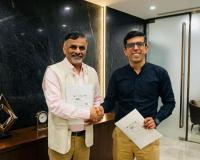
Addressing the inauguration ceremony, Municipal Commissioner Abhinav Goel stated that Kalyan has emerged as a rapidly expanding urban centre attracting people seeking employment and better opportunities. He said the city’s growth required stronger emergency healthcare infrastructure and described Fortis Hospital Kalyan as a healthcare institution that had served the city for two decades and would continue to strengthen healthcare delivery in the years ahead.
Speaking about the upgraded department, Dr Ashutosh Pandey said the launch marked 20 years of saving and improving lives across Kalyan and neighbouring regions. He stated that emergency care requirements had evolved significantly in scale and complexity over the years, and the upgraded department was designed for faster response and precision-based care. He further said that Code QRT 2.0 would extend these learnings across 15 partner hospitals, creating a network where emergency stabilisation, referral systems and access to definitive treatment would function without interruption.
Highlighting the department’s clinical outcomes, Dr Sudhir Gore stated that every aspect of the upgraded department had been designed based on real-life emergency experiences and patient outcomes. He said the hospital had consistently developed a protocol-driven emergency response system capable of delivering outcomes exceeding international benchmarks. According to him, the hospital achieved a door-to-balloon time of 28 minutes in a heart attack case against the global benchmark of 90 minutes. He also stated that the hospital recorded a door-to-needle time of 15 minutes in a stroke patient.
Explaining the larger vision behind the expansion, Dr S. Narayani stated that Kalyan remains one of the fastest-growing urban centres in the region and the hospital’s expansion reflects the city’s increasing healthcare demands. She said emergency care remains the strongest indicator of a hospital’s commitment towards public healthcare and affirmed the institution’s continued focus on strengthening emergency services in the coming decades.
The inauguration ceremony was attended by several leading specialists associated with the hospital’s emergency response ecosystem, including Dr Zakia Khan, Dr Rakesh Lalla, Dr Vivek Mahajan, Dr Manoj Kumar and Dr Sandeep Patil, along with emergency and critical care leadership teams.
For nearly two decades, Fortis Hospital Kalyan has played a critical role in ensuring that patients facing life-threatening medical emergencies do not need to leave the city for advanced treatment. With the launch of the upgraded Emergency Department and Code QRT 2.0, the hospital has further expanded access to advanced emergency intervention and strengthened coordinated critical care systems for communities across the Kalyan-Dombivli region.
About The Author








Comment List